October 7, 2026
How Can Pastors Avoid Burnout in Ministry?
Written By Grace Theological Seminary
Tagged With Preaching & Pastoring Deploy
By Anna Rosebrook (Grace College M.B.A. 26)
Pastors face unique stresses. You know them, but what causes them? How can you identify them, and how can you relieve them?
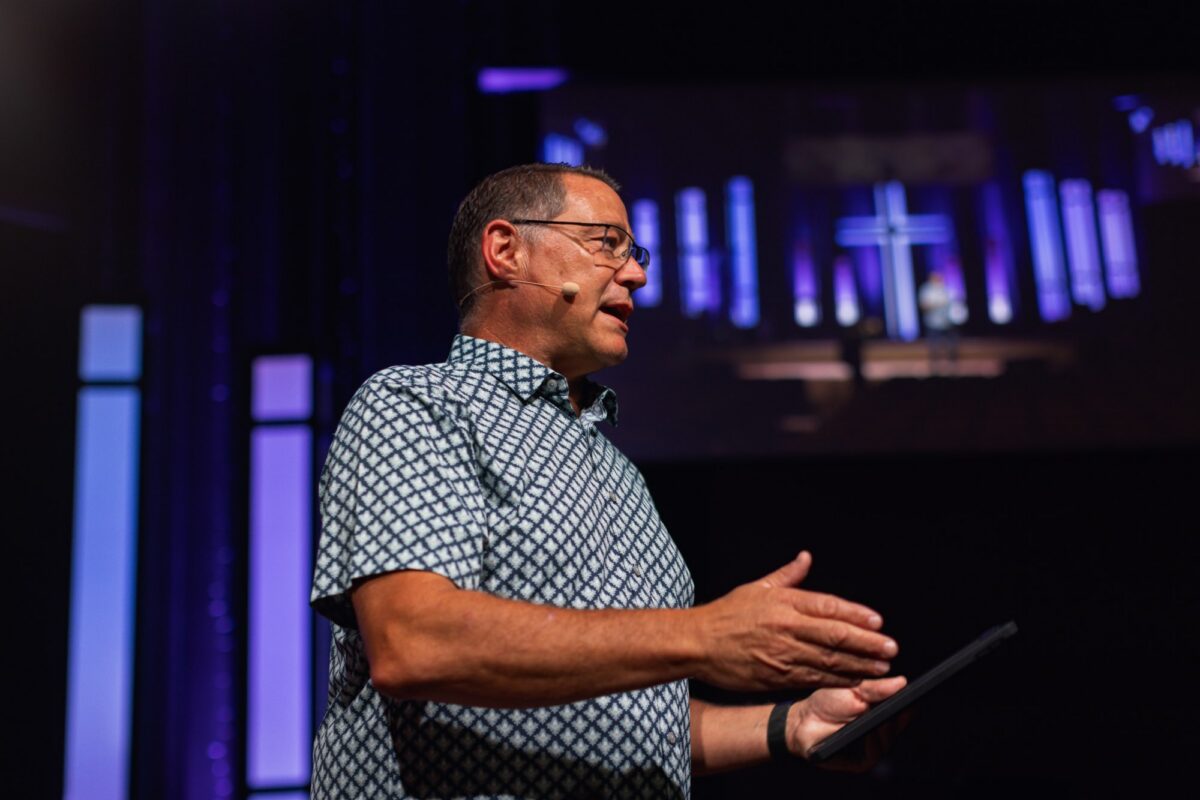
Pastor John Smith of Grace Church in Willow Valley, Lancaster, PA, reflected on his 47 years in ministry and shared how to prevent burnout. He now shares his experience and knowledge with students in Grace’s competency-based theological education model, Deploy.
What causes burnout in ministry?
From his experience in active ministry, Smith has seen burnout in both his own life and in pastors around him. According to Smith, there are five main reasons for burnout:
1. Unrealistic expectations
For Smith, burnout in ministry started with his own unrealistic expectations. He took his first solo pastorate while he was still in seminary. While the church had a troubled history and a high pastor turnover, he walked in with high expectations.
“I thought that if I just preached the Bible, things would change in the church,” Smith said. “My idealism quickly ran up against reality.”
2. Congregational demands
The second factor of burnout in ministry may be demands from your congregation. They expect you to be there for them in their time of need when, in reality, you don’t have margin to meet with everyone.
“Since the congregation pays their pastor, some churches start thinking of them like an employee,” said Smith. “They think, ‘I was under the weather. Why didn’t the pastor come visit me or call me?’ For a solo pastor especially, that can be very difficult with the demands on one’s time.”
3. Financial strain
While pastors don’t go into vocational ministry for financial profit, it can often become a stressor.
“Pastors are often underpaid compared to other vocations,” said Smith. “Though churches pay what they can afford, financial difficulties can add stress for sure.”
4. No boundary between work and home
Ministry isn’t confined to a nine-to-five workday. Pastors often experience spiritual burnout from feeling like they’re always “on.”
“You don’t leave your job at the office; you take it home with you,” said Smith. “I wish I had a dollar for every sleepless night in my 47 years of pastoral ministry.”
5. Pressure to “have it all together”
Chasing an unattainable standard is a big spiritual burnout driver for many pastors.
Smith gives this hard, but also relieving truth: “If that’s what you’re aiming for, you’ll never get there.”
Because we are living in a fallen world, we will never reach perfection. A pastor and his congregation shouldn’t expect to reach that standard.
What are the signs of pastoral burnout?
While burnout in ministry will appear differently in every pastor’s journey, there are several signs of pastoral burnout that Smith has seen through his own experiences.
- Lack of a prayer life
- Difficulty sleeping at night
- Losing patience with your spouse, family, or others
- Procrastinating necessary but unpleasant tasks
- >Growing lethargic
- Increased aimless phone scrolling (a sign of lack of focus)
Early in his ministry, Smith found himself working on the day he set aside as his day off. “I discovered myself doing more and more work on my day off, and it was just starting to kill me,” he said. “So I said, ‘I gotta look at my schedule.’”
While many pastors let their job bleed into their lives, Smith realized he needed a protected day off. “My day off is sacred,” he said. “I will not be taking calls on my day off unless it’s a desperate situation. It will be a time I spend with my wife and my family.”
Looking at his schedule helped Smith reset and spend intentional time with his family every week. God created us to rest every seventh day. It’s called a Sabbath, and pastors need to take that break too.
How can pastors avoid burnout?>
Vocational ministry may not be easy, but it’s definitely worth it. When pastors feel burnt out, Smith recommends Donald Whitney’s Spiritual Disciplines for the Overwhelmed. It offers simple ways to simplify your life and practice spiritual disciplines without adding to your overwhelm.
From Smith’s own experiences, here are some practical ways that pastors can avoid burnout in ministry:
1. Guard your heart
Proverbs 4:23 says, “Above all else, guard your heart, for everything you do flows from it.” Guarding your heart means that you conscientiously say no to temptation and you avoid feeding your heart the wrong things. Practically, this might look like spending time in prayer, in Scripture, and journaling. These practices help you rely on God’s resources instead of your own.
“I need to be praying more about whatever I’m doing in my ministry, and asking for God’s help, wisdom, strength, and the stamina I need to carry out the task and do whatever it takes,” said Smith. “When I pray about my ministry, I’m doing it with His resources.”
2. Preach the Gospel to yourself
Jerry Bridges, an evangelical Christian author, would say, “You need to preach the Gospel to yourself every day.” Smith takes this to heart, quoting 1 Corinthians 15:10, where Paul says he is who he is by the grace of God, but he worked hard to get there.
This reminds Smith that you can’t sit back and let God do all the work. You need to work out the salvation and the Gospel that God has blessed you with in every area of your life. It is incredibly important to remember the reality of your sin and the weight of your offense to God, building humility and joy at the thought of forgiveness and grace from the Lord. Preaching the Gospel to yourself keeps your faith from becoming monotonous and helps you stay sensitive to the truth of your need for a Savior who saves us to the uttermost (Heb. 7:25).
3. Protect your physical health
Although it isn’t recognized as a way to deload, physical exercise and movement help to reduce burnout in ministry. A review of 10 studies found that people who were more physically active tended to experience less burnout, and studies that tested exercise as a way to reduce burnout found that it could help lower exhaustion.
This could be regular walks, eating well, or managing weight. 1 Corinthians 6:19-20 says that our bodies are temples of the Holy Spirit, so we need to honor Him with our bodies.
“I do a lot of walking, and it really does make a big difference,” said Smith.
4. Support from others
When the pressures of ministry become too much, it’s important to have godly people alongside you to hold you accountable, encourage you, and support you in both good and hard times.
Smith suggests having one or two people outside your church to speak truth into your life. “You give them permission to say, ‘You’re thinking about yourself too much. You’re thinking about yourself too highly. You need to regroup and think more Gospel-centered on this, whatever the issue might be,’” said Smith.
Different perspectives help Smith as well.
“I often bounce ideas off my wife. In the average church in America, more than half of the congregants are women, so we want to make sure that we’re shepherding them well.”
Where can pastors get help for burnout?
hile it is important to have people around you, a seminary education can provide theological grounding and renew your mind.
“I think it equips an individual,” said Smith. Seminary equips students with the head knowledge that helps shape and transform their faith to effectively impact others for the Gospel.
Smith then quoted Romans 12:2, “Do not conform to the pattern of this world, but be transformed by the renewing of your mind. Then you will be able to test and approve what God’s will is—his good, pleasing and perfect will.”
A seminary education can help you renew your mind because it clearly presents the truth of Jesus. Each faith-integrated course reinforces this theme.
Second is the camaraderie with fellow students. “While that’s a little hard to develop in an online course, there are ways that it can still happen,” said Smith.
As a professor in Grace’s competency-based theological education model, Deploy, Smith connects with students worldwide. Smith sees how the program’s mentorship model has helped ministry leaders find encouragement and accountability as they pursue their degree.
“Yesterday I had a Zoom call with one of my students for this competency on understanding a biblically healthy church,” Smith said. They ended up talking about how the student, currently a lead pastor, needs to hire a full-time associate pastor. Smith gave him tips from his own experience.
Seminary provides an opportunity for mentorship and support from people who are currently or have been in the same contexts, situations, and problems as you.
“That’s the kind of thing that really keeps me going,” Smith said. “It keeps me wanting to continue teaching in the Deploy program.”
Are you interested in a seminary education to gain the foundational knowledge and equipping to lead your church when it gets hard? Maybe you’re already working in ministry. Check out Grace’s competency-based theological education model to see how seminary can fit your life!
FAQ's
-
Difficulty sleeping, mindless phone scrolling, procrastinating hard tasks like hard conversations or hospital visits, getting snappish with family, and growing lethargic can all be signs of burnout in ministry.
-
Pastors can avoid burnout by having a protected day off, maintaining a consistent prayer life, staying physically active, and having at least one or two people outside the church with permission to speak the hard truth to you when needed.
-
Burnout in ministry is often caused by unrealistic expectations (a pastor’s won and the congregation’s), the pressure to always be available, financial strain, and the reality that ministry bleeds into every part of life.
-
Pastor burnout is very common. According to Barna Group research, 24% of pastors now show a high risk of burnout, including quitting full-time ministry. While this number has dropped from 42% in March 2022, it shows many pastors face the same struggles.
-
Burnout is typically tied to chronic ministry-related stress and exhaustion. It often improves with rest, boundaries, and support. Depression is a broader mental health condition that may persist regardless of workload changes and often requires professional treatment.
-
Along with consistent weekly and annual rest, many pastors recommend taking a sabbatical every 5-7 years.
-
A church should build a healthy elder or leadership team willing to speak honestly with the pastor, respect their protected time off, and create a culture where delegation and shared leadership aren’t seen as a weakness.
-
A trusted mentor, spouse, or friend is a good resource for pastors. A supportive elder or leadership team is also foundational.
Share
Tagged With Preaching & Pastoring Deploy