October 13, 2026
How Should Christians Use AI in Ministry?
Written By Grace Theological Seminary
Tagged With Preaching & Pastoring

You’ve probably used AI today without even thinking about it. Whether we like it or not, the grammar suggestions that pop up as you type an email or the predictive text on your phone are all AI.
The real question isn’t should Christians use AI; it’s asking how should Christians use AI. When using AI in ministry, use discernment, use the gifts God has given you, and listen to the Spirit’s calling.
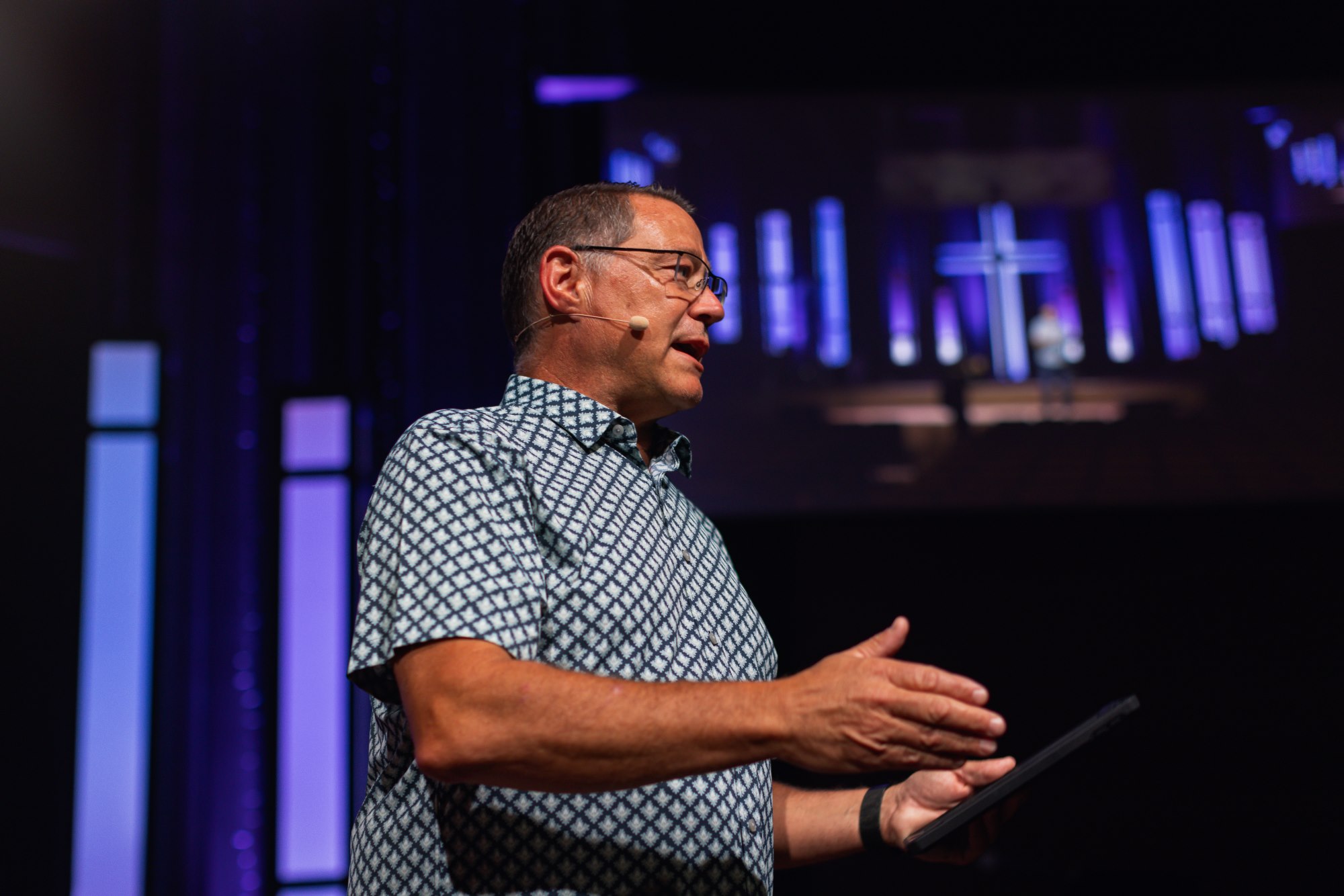
Dr. Freddy Cardoza, Vice President and Dean of Grace Theological Seminary, and Dr. Anthony Casey, Associate Professor of Intercultural Studies, shared their thoughts on using AI in both our personal lives and in ministry.
“Everything we touch has both glory and gore, promise and peril,” said Cardoza. “AI is primarily an “amoral” tool. It’s neither good nor bad in itself. For the most part, it’s how it’s applied.”
What AI Looks Like Today
AI isn’t one single thing. It exists on a spectrum, ranging from a simple spell check to a complex research synthesis, content generation, and even video and audio editing.
In this way, AI is everywhere around us, even in ministry. Bible study platforms and noise reduction software for recorded sermons, for example, are powered by AI. These can be helpful tools, but Christians, with the Holy Spirit indwelling them, must discern where they can be useful and where they are destructive.
“Anytime that discerning people fail to discern and use AI wisely, they will either render themselves less able to be used by the Lord and His Spirit in a way that’s truly transformational, or people that rely on it will have less divine intimacy with the Lord, and less fellowship with one another through the Spirit,” Cardoza said.
Three Dangers for AI in Ministry
1. AI Can’t Replace Presence
There is no doubt that ministry is relational. Ministry leaders need to show up, listen, and sit with people in their pain. They offer wisdom formed by their own experience, what the Spirit has revealed to them through God’s Word, and their interactions with other godly people.
As Cardoza put it, “Anything that necessarily involves the impartation of wisdom, discernment, and truth will be a cheap substitute. AI is no substitute for humanity, human contact, or human empathy.”
While AI might be able to draft a comforting message, it can’t sit with someone in hospital or give the presence they need.
2. AI Can Distract From the Spirit’s Leading
In the same way, ministry leaders need to be present to listen to what the Lord is telling them. If a pastor tries to prepare a sermon, for example, using AI, he can easily be distracted from the Lord’s leading and voice. Only the Lord knows what will impact and touch the congregation’s heart. AI, on the other hand, inhibits our ability to be human and use the creativity and intelligence the Lord gave us when He made us in His image, Imago Dei.
Dr. Casey remarked, “I prefer to be the kind of person that’s got my eyes open to the world around me at all times. Even driving to church in the morning, I could see something that I might pick up to use as I preach that very morning. That keeps me fresh and in the moment. I miss those opportunities if I rely too heavily on AI even for things like sermon illustrations.”
Coming from the Lord, this presence helps to tune into the Spirit and build knowledge, which can help us help others.
3. AI Can Quietly Erode Discernment
This third danger is subtler and possibly even more dangerous for people whose jobs depend on discernment. AI is only as knowledgeable as the information it has been trained on. Without having the knowledge and expertise to check its work, an AI-generated answer can sound authoritative while being seriously wrong.
Casey described it this way: “I asked ChatGPT to give me the evangelical critique of a certain controversial missions issue. It did a good job of it. The only reason I knew it did a good job, however, is because I have a PhD, I’ve read all the books it cited, and I know the people it mentioned. If you didn’t have that background knowledge, it would always look amazing, even if it might not be correct. And I can give many examples of AI not being correct.”
For a pastor without years of theological training, he may not have the internalized knowledge to know when AI has gotten something wrong.
An African proverb captures exactly what’s at stake: “When a bushman dies, a whole library goes with him.” The idea is that this man has everything needed for life stored in his mind, ready to retrieve and apply at any moment. Hard-won, internalized wisdom isn’t something you can outsource without losing it in the process.
Why Seminary Matters in the Age of AI
A lack of internalized wisdom and discernment is why seminary matters so much today. While avoiding AI in ministry isn’t the answer, building the skills to listen to the Spirit’s leading to comfort, communicate, and disciple are invaluable.
“Seminary is like a feast that you’ve been invited to,” said Casey. “Everybody likes to eat a great meal, and when the best chefs who are masters of their craft have cooked an absolute feast, you can’t get there fast enough. You just sit down at the table, they lay it out before you, and you enjoy it as you benefit from what they’ve produced.” In the Seminary classroom, your professors are the chefs setting the table for you, with love, knowledge, and skill honed from decades of study and ministry in the local church.
Seminary provides the kind of formation that AI could never replicate or replace. You get to spend years of study under people who have devoted their lives to knowing God’s Word deeply and thinking theologically. This provides the opportunity to build internalized wisdom that allows a pastor to affirm truth and recognize error when they encounter it.
AI can help organize a calendar or clean up audio, but it can’t impart wisdom, discernment, or the transformation that comes from the ongoing work of the Holy Spirit.
“Those things can never, ever be replaced by technology or AI,” said Cardoza.
AI in ministry is a tool, and like any tool, it can be used wisely or carelessly. But the depth that ministry requires has to be built through years of study, prayer, and discipleship.
Grace Theological Seminary is devoted to providing a solid theological education for effective ministry. Check out our programs, including our Master of Ministry Studies Technology Concentration and our online Doctor of Ministry Hybrid Church Concentration, to learn how ministry leaders can use technology as an advantage for the Church.
FAQ's
-
It depends on how it’s used. AI is already embedded in daily life, so avoiding it entirely isn’t realistic. The real question is where it helps versus where it risks replacing something essential, like discernment or genuine human presence.
-
It is not inherently a sin to use AI. It is not bad in itself, but believers need to exercise caution and discernment in how it is used. Using AI for administrative tasks is generally fine, but relying on it in place of prayer, study, or real pastoral presence is where caution is needed.
-
While AI has the ability to write out a sermon, it changes the purpose of preaching. Staying personally engaged with Scripture and the world is what shapes a pastor’s own voice and makes them available to listen to what the Lord is telling them.
-
Humanity is made in God’s image with real creativity (Gen. 1:27, Ex. 35:31-32). We are all living in a fallen world where even good tools can be misused (Gen.6:5). Scripture also draws a line between general revelation (truth found through creation and human discovery) and special revelation (truth uniquely given through God’s Word). In areas of special revelation, the greatest caution should apply.
-
While there are several dangers of using AI, some of the main concerns are using AI as a substitute for genuine human presence, distraction from the Lord’s leading, and leaning on it in place of internalized theological depth.
-
An answer isn’t the same as wisdom. Seminary builds the tested, internalized knowledge that lets a pastor recognize truth and error alike, something no AI response can substitute for.
Share
Tagged With Preaching & Pastoring