February 21, 2026
Seminary Reflection: The Role of Church Technology in Modern Ministry
Written By Grace Theological Seminary
Tagged With Master of Arts Online Programs Trent Lambert
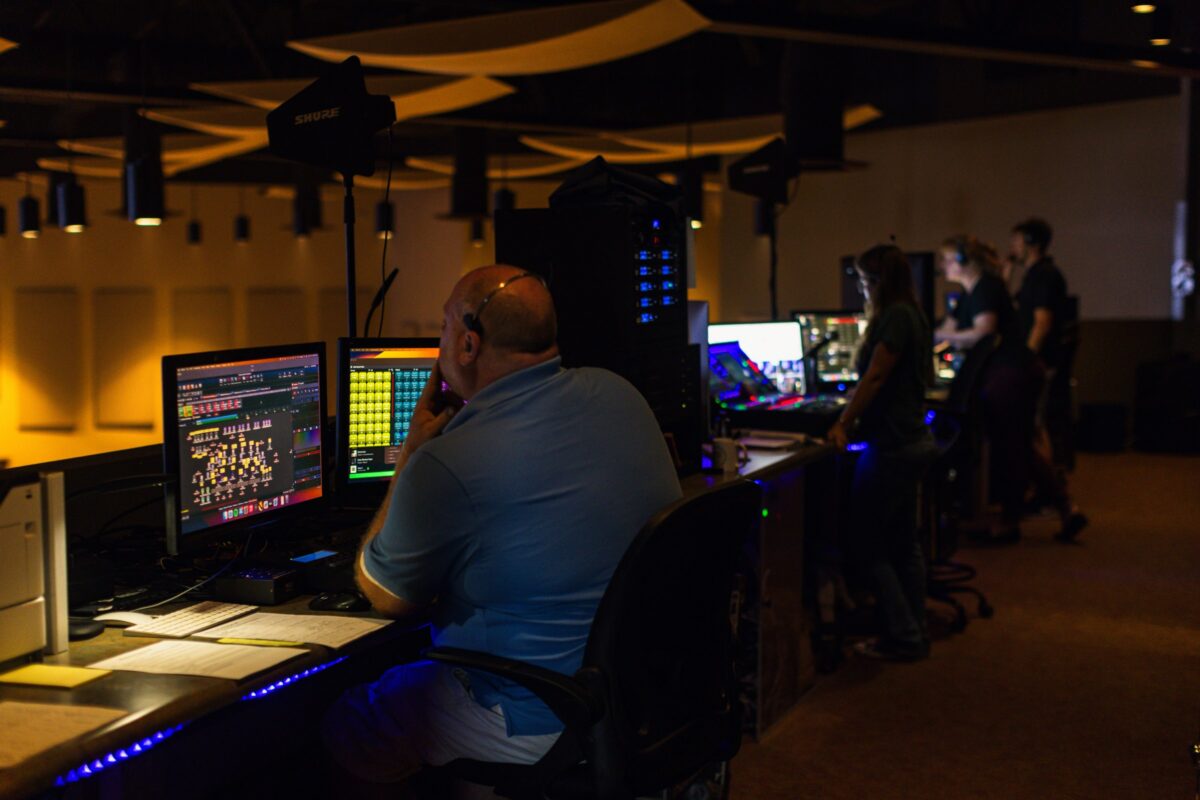
The advancement and use of technology are major driving factors in today’s culture. People are influenced by technology in both their lifestyles and habits. Think about the last time a video meeting platform went down. Suddenly, meetings stopped, and productivity stalled. Or think of a time when you misplaced your cell phone. I don’t doubt that it sent you into instant anxiety. Technological advancements have made life more efficient, closed communication gaps, enhanced visual imagery, and improved the overall quality of life. But how does technology help the church?
Technology and the Church
While technology has enhanced society in many ways, the church has been hesitant to embrace it. Technology and the Church are often seen on opposite ends of the totem pole. In church history, technological advancements such as the Gutenberg Press were often held at arm’s length or immediately rejected by the church. This has sometimes resulted in the church being a late mover in culture, playing catch-up to communicate its message with vibrancy and clarity.
One thing is certain: God is the creator and the innovative force influencing humanity. He is the giver of gifts and insight to human intellect for technological advancements in missional expansion and expression. Outdated or irrelevant technology can be distracting and undermine the church’s message. Up-to-date church technology used wisely can make a lasting impact in a digitally immersed culture.
Some church cultures feel uneasy talking about using technology in ministry. Too often, technological relevance is categorized as changing or “watering down” the message of Christianity. Relevance is not changing the message but changing the medium in which the message is communicated. The Church must rejoice in the era of robin-egg-blue painted basement walls and flannelgraphs, but it also must move on to leverage church tech jobs to create vibrant websites for visitors’ first impressions, social media for small group communities, efficient office and program procedures, and stunning worship experiences that allow people to feel the presence of God.
Church technology can be utilized to share the gospel further, not to distract from it.
Why do we need Technology-Focused Concentrations?
Church technology has become integral to church ministry. Churches offer virtual service options to their congregations, record sermons for later listening, give donations through online platforms, and so much more. More than ever before, we need to use church technology to tell the story and message of Jesus Christ.
Instead of being slow to adopt and use these tools, what if the church began using technology in ministry and its ever-changing advancements first? What if the church used technology to influence this current culture with the transforming message of Jesus? What if…?
Jesus was a master at connecting with people. In a like manner, believers today should strive for new and innovative ways to connect with people, all with the goal of bringing them to Him.
This presents an opportunity for educational institutions to train and prepare ministry leaders to use technology in various forms and applications. Grace College and Seminary is doing just that! Depending on your preference, there are different avenues that you can take:
These programs merge the timeless message of scripture with innovative strategies, helping the ministry leaders meaningfully engage with technology and the Church. From communication and digital ethics to the use of AI and Big Data, you will be equipped to respond to a technological world in a way that advances the Gospel.

Trent Lambert
Dr. Trent Lambert is an alumnus of The Ohio State University, earning a B.S. in Business Administration with a concentration in Church Administration in 1995. He earned an M.A. in Ministerial Leadership at Indiana Wesleyan University and a M.Div. and D.Min. at Liberty Baptist Theological Seminary. Trent has over 30 years of experience teaching and writing Bible, ministry, and leadership-related courses, as well as advising and mentoring students at both undergraduate and seminary levels, and he has over 20 years of pastoral ministry experience, including planting and pastoring churches on the West Coast and in the Midwest. Currently, Trent serves as Director of the Center for Thriving Leaders, Director of the Proclamation Project, Director of Seminary Online Programs, and Professor in the School of Ministry Studies at the Seminary.
Share
Tagged With Master of Arts Online Programs Trent Lambert