March 4, 2026
What Does Saint Mean? Equipping Saints for the Work of Ministry
Written By Grace Theological Seminary
Tagged With Master of Divinity Dr. Matt Harmon
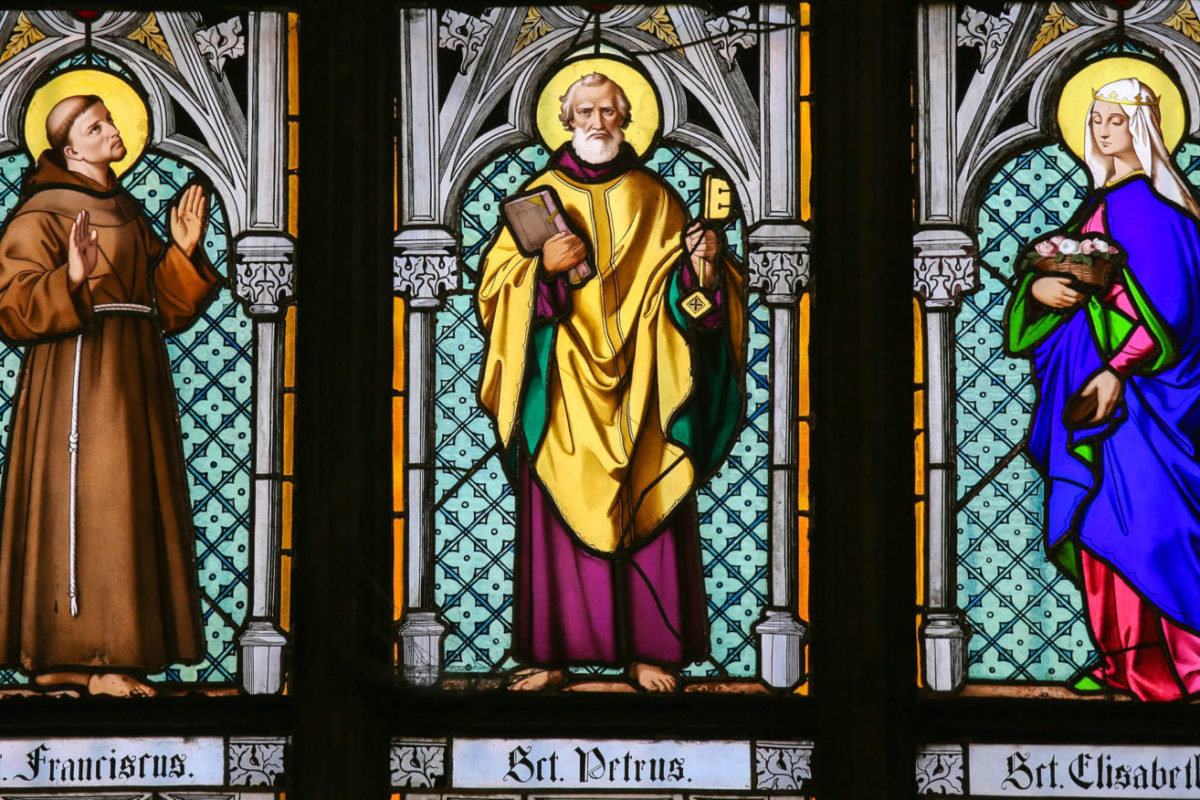
Often, when one hears the word saint, the first thing that comes to mind is a person who is especially holy or religious. For others, it might be a person who has been officially recognized (the technical term is “canonized”) by the Roman Catholic church for their “heroic virtue” and evidence of at least one miracle performed in their lifetime.1 But as it is used in the Bible, the term saint has a different meaning.
At Grace Theological Seminary, we believe that every person has been created by God to do good works and is set apart to be a witness in their chosen career field. In that sense, we are equipping the saints for the work of ministry. Equipping saints at Grace Theological Seminary means forming spiritually mature, biblically grounded leaders who are ready to build up the body of Christ wherever God sends them.
But let’s start at the beginning. What does saint mean? In its most basic sense, a saint is a “holy one,” someone who is set apart for God’s special purposes. As a result, every follower of Jesus Christ is a saint. In most of his letters, the apostle Paul refers to the recipients as saints, including the church at Corinth, which faced significant moral and theological problems!
The New Testament writers draw their use of the word saints (“holy ones”) from the Old Testament (e.g., Exod 31:13; Lev 11:45; 19:2; Dan 7:18, 27). Particularly important is Exodus 19:5-6, where God refers to Israel as “a kingdom of priests and a holy nation.” I Peter 2:9 applies this same language to believers: “you are a chosen race, a royal priesthood, a holy nation, a people for his own possession, that you may proclaim the excellencies of him who called you out of darkness into his marvelous light.”
To grasp what it truly means that every follower of Christ is a saint, we can explore it from two distinct yet complementary angles. The first is our position before God. In 1 Corinthians 1:30, Paul writes that Christ Jesus “became to us wisdom from God, righteousness and sanctification and redemption.” The word translated “sanctification” (or “holiness” in some translations) is part of the same word family as the word for “saint.” All who are identified with Jesus Christ by faith are given the status of “holy” before God because of what Jesus has done for us.
The second angle is our experience. In other words, because of our status as “holy ones,” our lives should reflect that reality. Peter challenges believers to “not be conformed to the passions of your former ignorance, but as he who called you is holy, you also be holy in all your conduct” (1 Pet 1:14-15). This command is grounded with a quote from Leviticus 11:44, “since it is written, ‘You shall be holy, for I am holy’” (1 Pet 1:16). As Christians, we demonstrate that we are set apart for God’s special purposes by living lives that reflect (albeit imperfectly) the moral purity of God himself. In that sense, Hebrews 12:14 can exhort believers to “Strive for peace with everyone, and for the holiness without which no one will see the Lord.”
If you have turned away from your sins and trusted in Jesus and what he has done on the cross, you are a saint, a “holy one.” So, what does saint mean? It means God has set you apart for his special purposes in this world and has sent the Holy Spirit to dwell in you. The Holy Spirit is at work in you to transform your life so that you reflect the ultimate holy one, the Lord Jesus Christ. In turn, you are called not only to grow in holiness yourself, but also to participate in equipping saints around you.
Welcome to sainthood! Grace Theological Seminary’s Master of Divinity in General Studies has a mission of equipping saints to fulfill their God-given calling. Get started today by connecting with our friendly admissions staff.
1 See http://www.catholic.org/saints/faq.php#how-does-the-church-choose-saints

Matthew S. Harmon
Matthew S. Harmon (PhD, Wheaton College) is Professor of New Testament Studies at Grace College and Theological Seminary in Winona Lake, Indiana. He holds a degree in Telecommunications from Ohio University, a Master’s of Divinity from Trinity Evangelical Divinity School, and a Ph.D. from Wheaton College. He is the author of numerous books, including commentaries on Galatians, Philippians, 2 Peter, and Jude, and several books on biblical theology. His areas of specialty include hermeneutics and how the biblical authors use Scripture. Before becoming a professor, he served on staff with CRU for eight years. Matt also serves as a Fellow with the Carson Center for Theological Renewal. He is the cohost of two podcasts: The Various and Sundry Podcast with John Sloat and The Biblical Theology Briefing with Ben Gladd. You can see more at www.docharmon.org
Share
Tagged With Master of Divinity Dr. Matt Harmon